
Today was a day off, but unfortunately the weather was bad and I couldn’t go cycling. A shame.
Good opportunity to properly introduce the bike I bought.
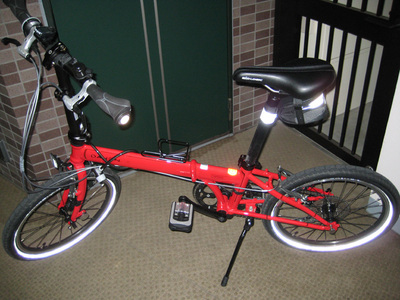
Before this bike, I’d been using the city bicycle I’d ridden in high school, brought from home in Nagoya.
But after 12 years it was time for a replacement. And since the bike parking at my apartment building is completely exposed to rain, a folding bike seemed ideal.
Researching on price.com and similar sites, I was initially planning to buy the Panasonic LIGHT WING.
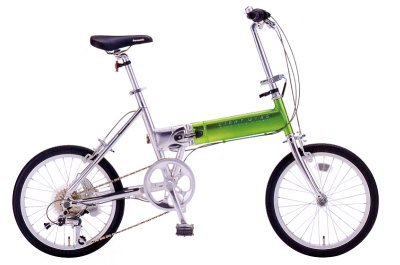
I went to a bike shop ready to buy, but the staff asked what I was planning to use it for. When I said “I want something foldable that I can also ride medium distances,” they told me that particular Panasonic was “city-only” and wouldn’t really handle longer rides.
The shop staff recommended the DAHON Speed P8 as the best value option.
But they didn’t have it in stock (recommending a bike they don’t carry… hmm), so I ordered online.
Very convenient — arrived by cash-on-delivery in about a week. Under ¥70,000.
This bike is introduced on pages like this as a folding bike that doesn’t ride like one. The chromoly frame gives it a quality where just spinning the pedals — not even pushing — feels like acceleration.
In hindsight, the shop staff were absolutely right.
———————————————————————
Folding is very straightforward:
1. Fold the pedals and lower the saddle.
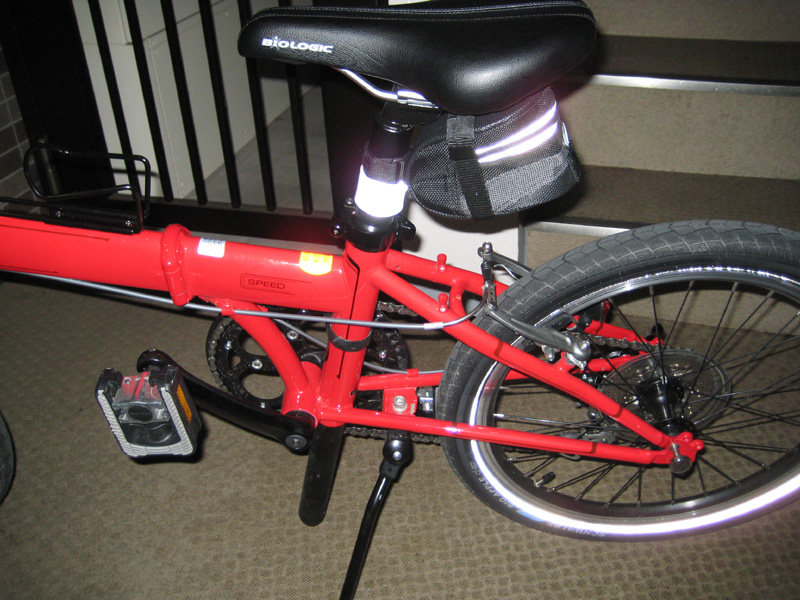
2. Fold at the handlebar stem.
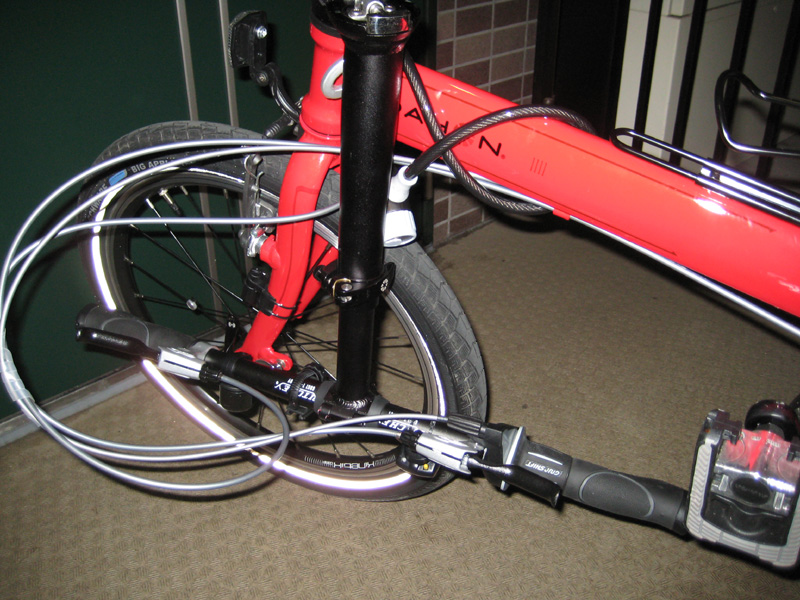
3. Fold the main frame.
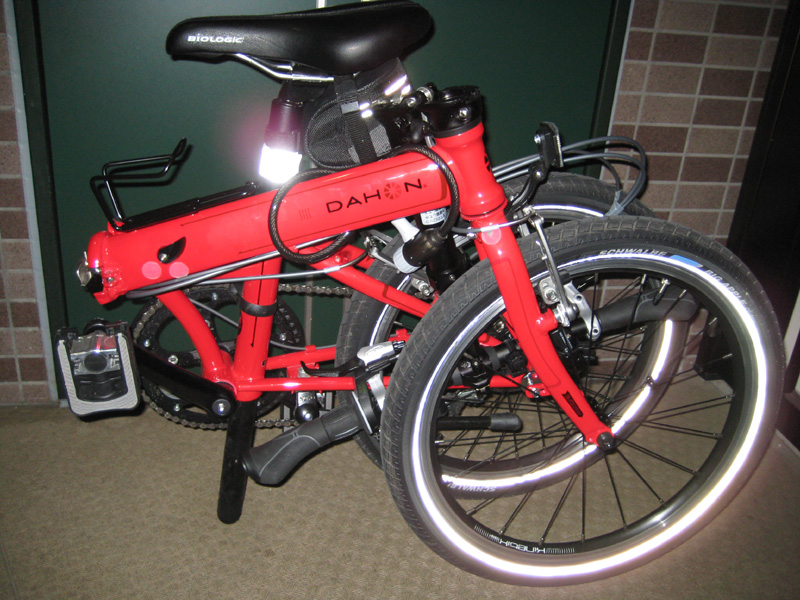
That’s it. When folded, it stands on its own using the saddle base and the two wheels — no leaning required.
——————————————————————————
Now for the accessories I’ve added:
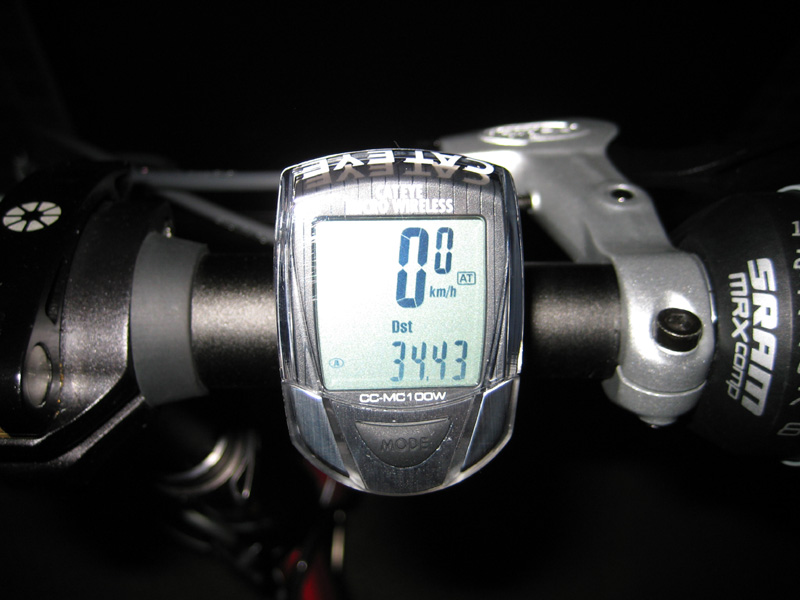
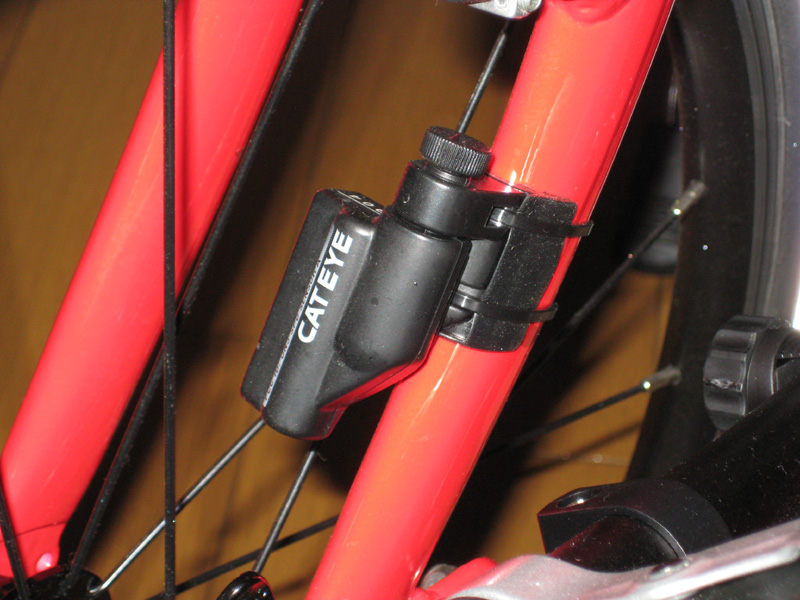
· Cycle Computer
When cycling, you want to know your distance. And for keeping tabs on fitness and metabolism, having concrete numbers come out of a ride is very satisfying. I’d even bought one for curiosity’s sake back in middle school using saved-up allowance. This time, with an adult income, I got one immediately.
Nowadays there are “wireless” versions. Normally the display and sensor are connected by a wire, but this one has none. For a folding bike, the wire would pass right through the fold point and get annoying — so wireless is genuinely useful here.
· LED Light
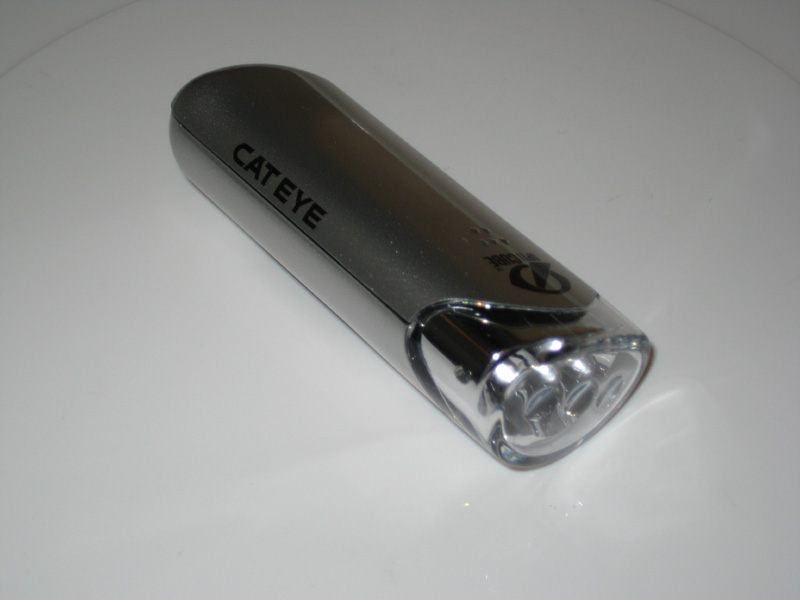
Lights have evolved too. LED is the standard now — low power consumption, high brightness. I chose one that runs on two AA batteries, anticipating a future switch to rechargeables. (Most lights use three AAA batteries, and an odd number is awkward for charging.)
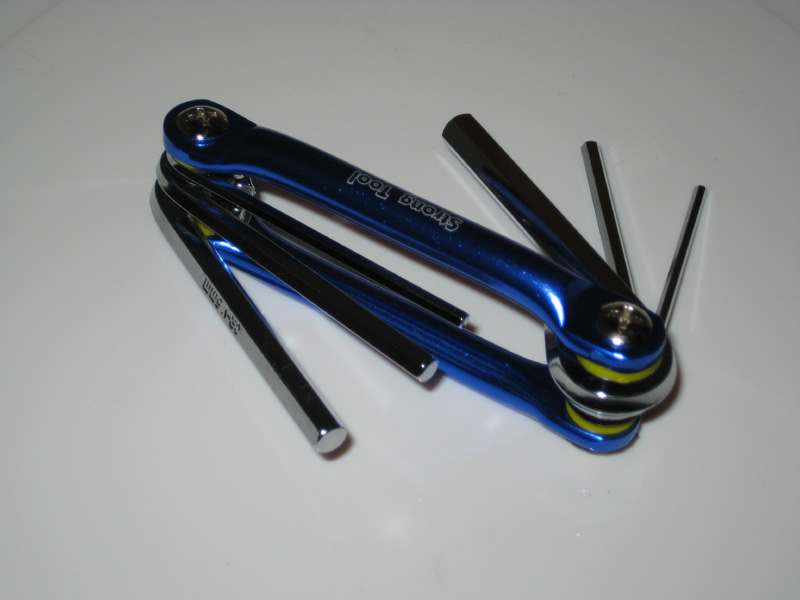
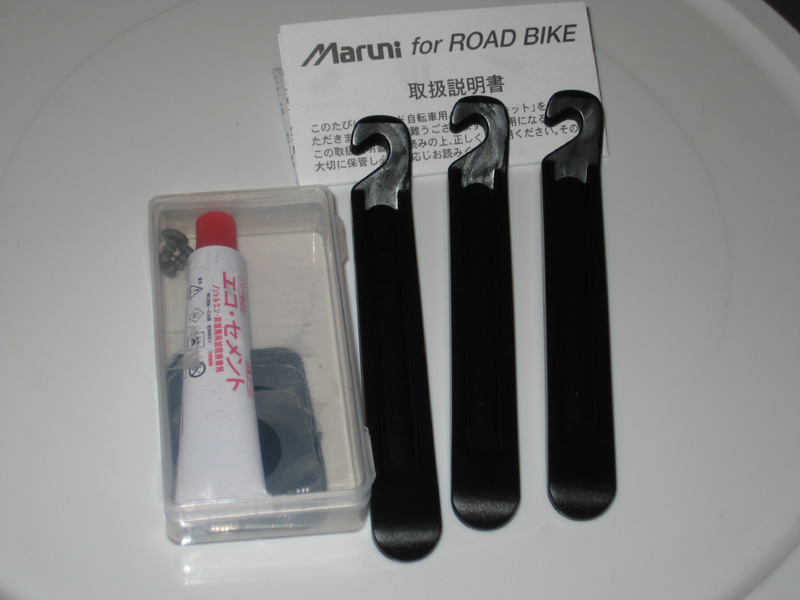
· Tool Kit and Puncture Repair Kit
For those times when you get a flat or a bolt works loose mid-ride, I put together a tool kit. Goes in the saddle bag so I’m covered for emergencies.
This bike also has a built-in pump in the seat tube, so no need to buy a separate one.
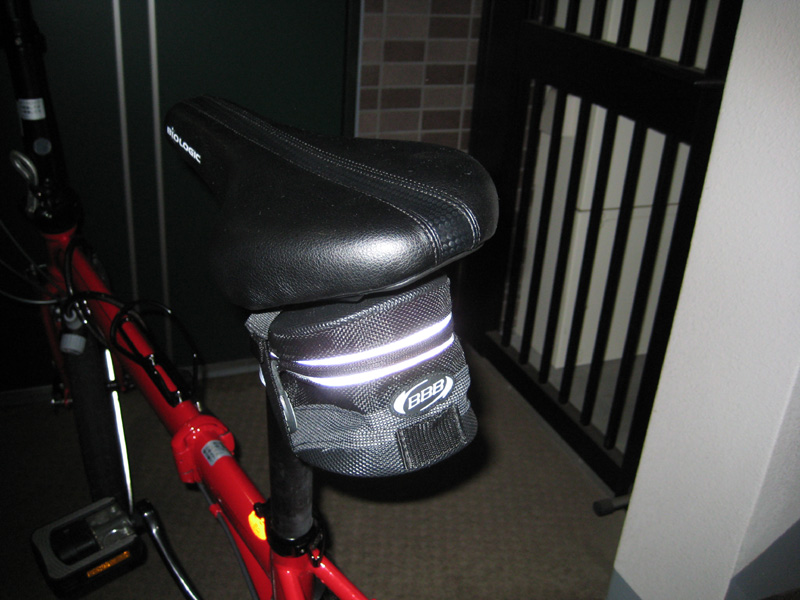
· Saddle Bag
When riding, I want to minimize what I’m carrying (no backpack if possible), so I added storage under the saddle. About ¥2,000 from Tokyu Hands.
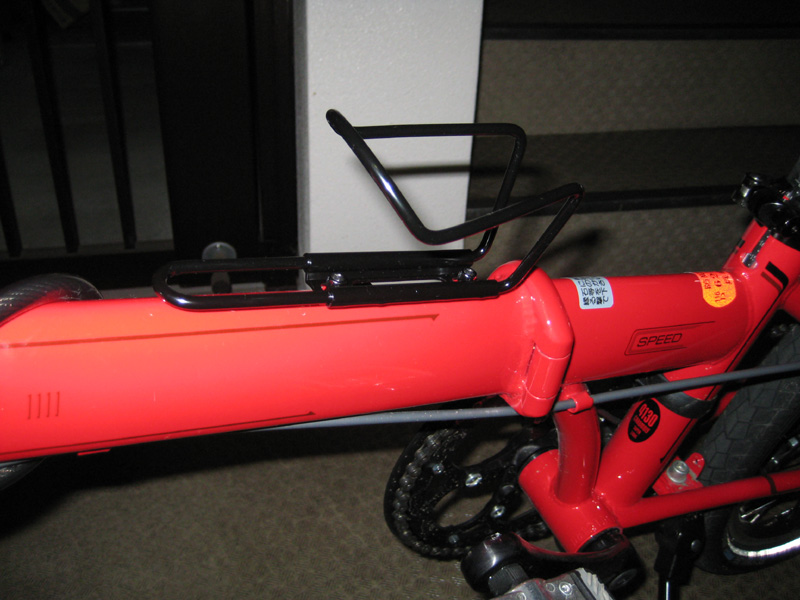
· Water Bottle Holder
Same reason — keeping my hands free. I only noticed about a week ago that the bike frame actually has mounting holes for a bottle cage.
——————————————————————————
This turned into a longer post than expected, but that’s the bike introduction.
Looking forward to going to all kinds of places on this from here on out.